Behind the Photograph
The Wendella
Chicago River · Michigan Avenue · Summer 2024
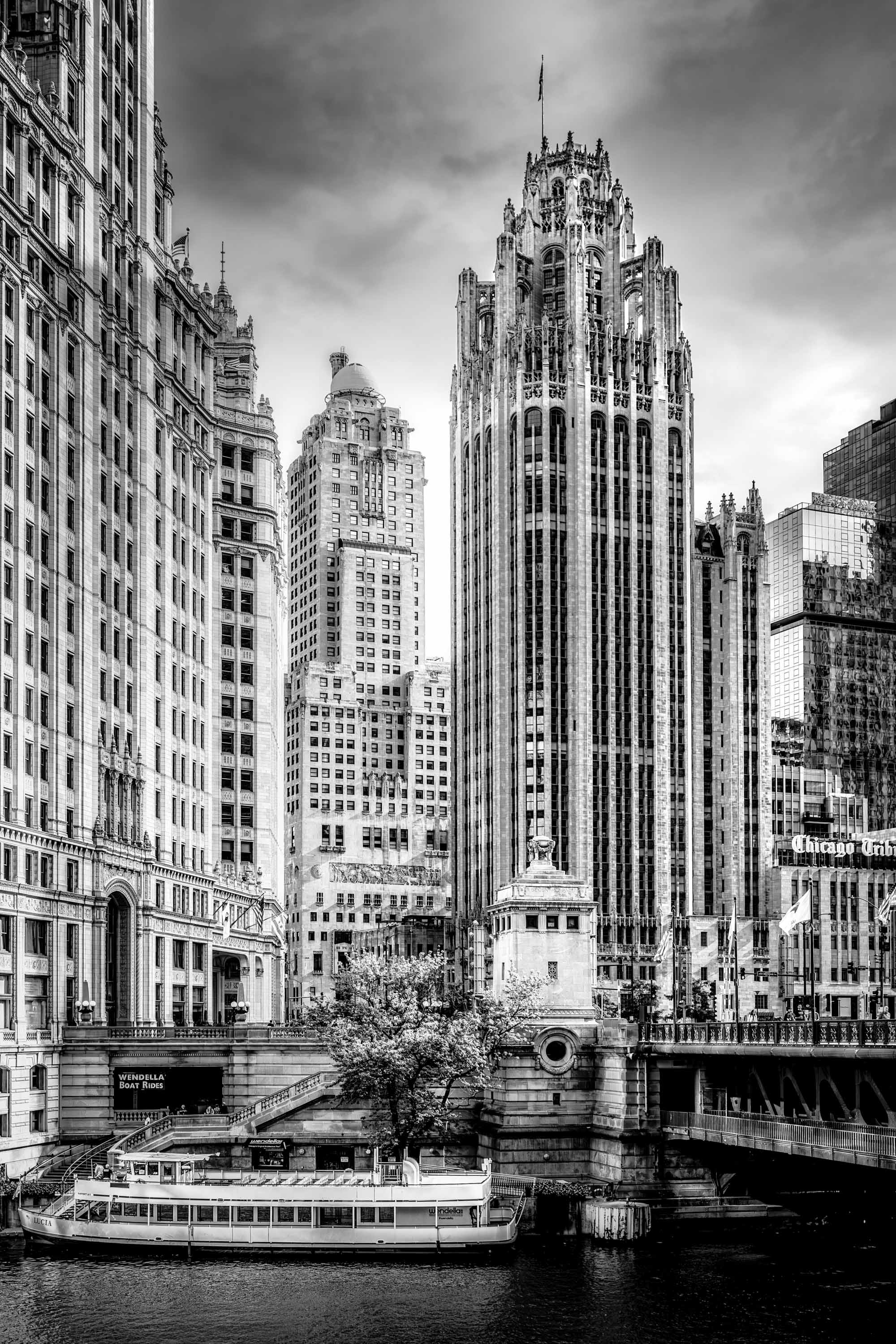
From Wacker Drive, just west of Michigan Avenue, Chicago gathers into a single frame.
A Wendella boat rests at the river's edge as passengers fill its open deck. The DuSable Bridge crosses behind it. The Wrigley Building rises along the left side, while Tribune Tower reaches above the river with its Gothic crown set against a heavy summer sky.
The buildings give the photograph its scale, but the boat gives it its story.
I had photographed this view before. On this summer morning in 2024, the Wendella caught my attention as soon as I arrived. It was still at the dock, loading passengers for another trip along the Chicago River. I worked quickly and made the photograph handheld, including the bridge tower and its dark steel structure as part of the composition. One frame brought everything together.
Wendella has carried visitors and Chicagoans along the city's waterways since 1935. Its boats became part of Chicago life long before architectural river tours became one of the city's best-known experiences. I remember Wendella as one of the earliest tour boats and water taxis on the river. It has been there for as long as I can remember, loading passengers beneath Michigan Avenue and moving between the buildings that define downtown Chicago.
The scene also reaches much further back.
I stood near the former site of Fort Dearborn, built in 1803 on the south bank of the river near what is now Michigan Avenue and Wacker Drive. Bronze markers in the pavement still trace its approximate location. From that ground, Chicago developed around the river. What began as a military outpost became one of the busiest urban intersections in the country.
More than two centuries later, the river remains a working passage through the city. Tour boats leave their docks. Water taxis carry passengers between neighborhoods. Downtown workers cross the bridges above. Kayakers move close to the water while traffic passes along both banks.
I chose to photograph the scene in black and white because it brings these different periods together. The old bridge, the Wendella, Tribune Tower, and the Wrigley Building share the same tonal world. The dramatic clouds deepen the sky and give weight to the carved stone, riveted steel, and dark river below. Color would have separated the parts. Black and white lets the history remain continuous.
The photograph feels busy because the river is busy. It also feels timeless. Passengers change, buildings rise around it, and the city keeps moving, but the Wendella remains at its familiar place beside the bridge, preparing once again to travel through the heart of Chicago.