Behind the Photograph
The Colonnade
Union Station · Chicago
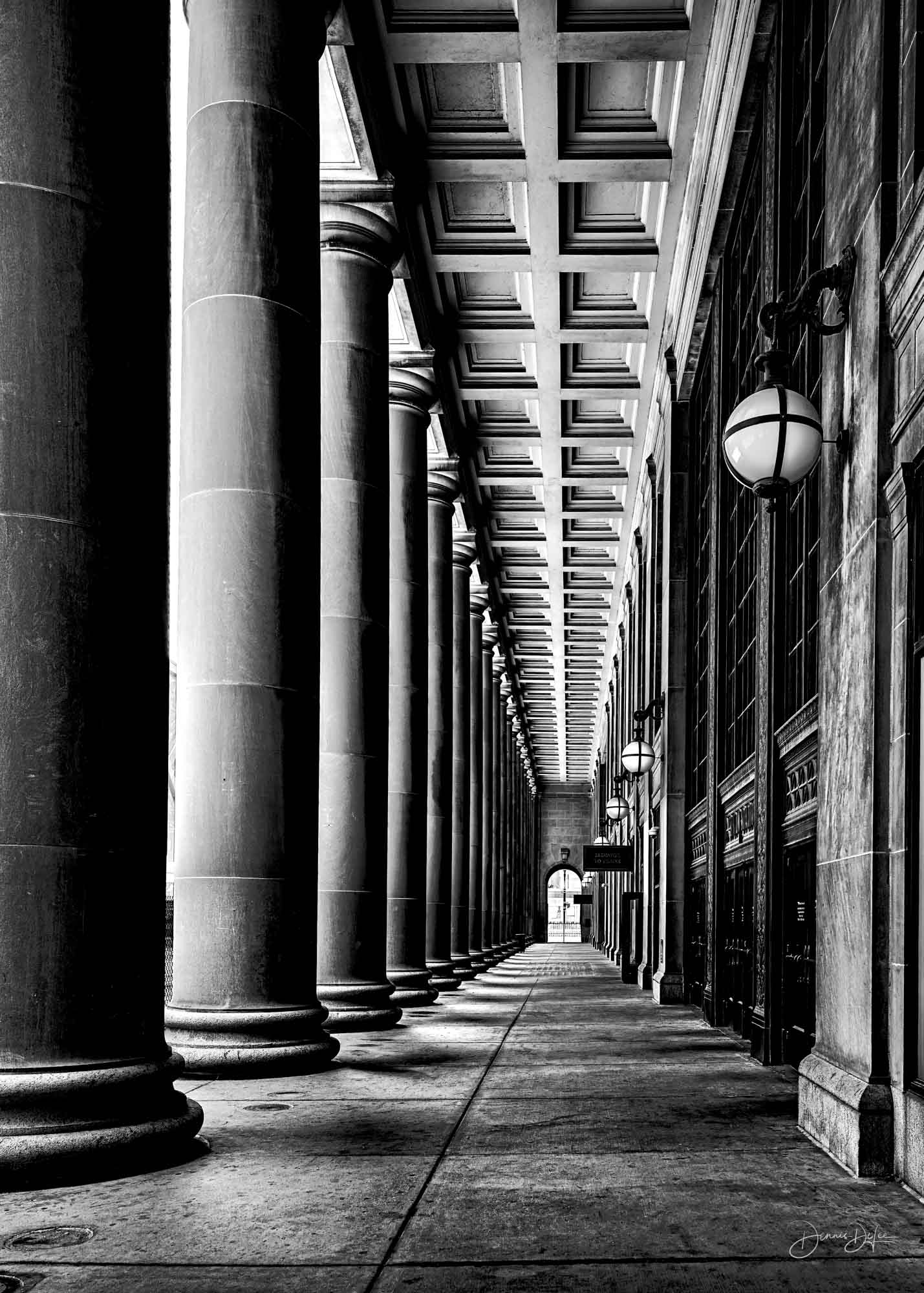
I went to Union Station one summer morning in 2024 with the simple intention of photographing the building. I had passed through the station before, usually on the way to a train, yet I had never noticed this colonnade. I might have entered through another doorway. I might have walked past it without looking closely.
This time, I stopped immediately.
The columns seemed to continue far beyond what the eye expected. Their size gave the passage a formal, imposing presence, something closer to a civic monument than the entrance to a working train station. Morning light entered from the east, striking the stone from the left and leaving the nearest columns in deep shadow. Above them, the repeated squares of the coffered ceiling carried the same perspective into the distance.
The composition felt complete from the moment I saw it.
The closest columns filled the frame while the others narrowed toward a distant vanishing point. The passage became a tunnel built from stone, shadow, light, and repetition.
Along the wall, the globe fixtures created another visual rhythm. They grew smaller as they receded, echoing the columns without competing with them. The actual entrance to the station sits partway down the passage, beneath the dark sign projecting from the right wall. People moved through it steadily, even though the morning rush had already passed.
I waited.
For a brief moment, the walkway cleared. Without people in the frame, the architecture took over. The columns became less like decoration and more like a procession. The ceiling, lamps, pavement, and wall all moved toward the same distant opening.
The scene reminded me of a colonnade I photographed at the Louvre in Paris. The connection was immediate. Both spaces use classical forms to guide the eye through a long passage. Yet this one felt distinctly Chicago. Similar columns appear on the city's old banks, government buildings, and offices, but here they form their own enclosed path into the station.
What holds me now is the light at the far end.
The columns draw the eye into the photograph, but the opening keeps it there. The passage seems to promise another room, another street, or another journey beyond the frame. The photograph never answers the question.
It only leads you toward it.