Behind the Photograph
The Aragon Ballroom
Lawrence Avenue · Uptown, Chicago
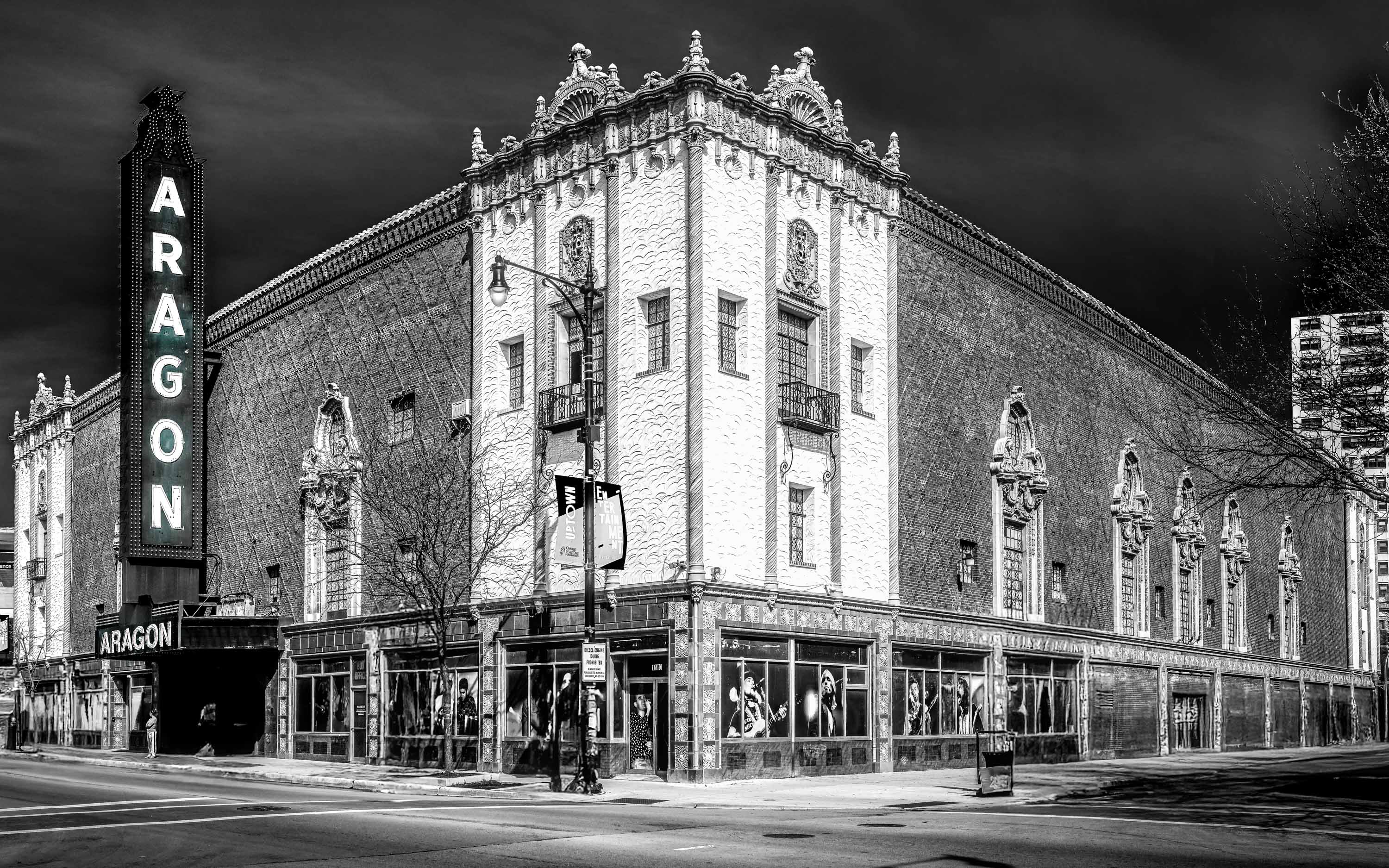
I made this photograph in spring 2026 while walking Uptown with my camera, open to whatever the neighborhood offered. When I came up to the Aragon Ballroom on Lawrence Avenue, the choice was immediate. I had to photograph it. This is one of those Chicago landmarks that announces itself before you even think about composition.
I stood kitty-corner across Lawrence from the ballroom. That position mattered. A straight-on version felt flat and ordinary. From the corner, the whole building came alive. The vertical ARAGON sign rose over the entrance; the ornate terra cotta caught the light, and the long brick walls stretched away on both sides. That angle showed the building the way I wanted people to see it. Big. Solid. Unmistakable.
The Aragon is enormous, and I wanted the photograph to make that clear. Its size and its sign are what give the image its strength. The building takes over the block. Even before you know anything about its past, it feels important.
That stretch of Uptown stays busy, so timing matters too. Traffic moves through there all day. The stop signs helped create short pauses, brief openings where the street settled enough for the scene to hold together. I made several compositions before landing on this one, but this frame had the power the straight-on view lacked.
Black and white was the right choice. It pushes the eye toward the tone, texture, and structure. The pale decorative facade stands out against the darker brick, and the deep sky adds weight to the whole scene. In black and white, the Aragon feels older and more rooted in the city's past. The scalloped brickwork, terra cotta ornament, and towering sign all read with more force.
History is a big part of why this building matters. The Aragon Ballroom opened in 1926 and became one of Chicago's great dance halls. Its Spanish Baroque Revival exterior still feels theatrical today, and inside, the ballroom was designed to feel like a Spanish courtyard under a night sky. It was built for a spectacle from the very beginning.
For generations, Chicagoans came here to dance. My own parents' generation did, and so did plenty of others. Over time the music changed, but the building stayed at the center of Chicago nightlife. Today it is known more for concerts than ballroom dancing, and the posters in the windows at street level matter for that reason. They remind you that this is not a frozen landmark. It still lives. It still draws crowds. It still does what it was built to do.
My connection to the Aragon is not inside the ballroom. It comes from passing it again and again. My daughter and her family lived a block away for several years, so we saw it often. That repeated view made the building more familiar, and familiarity often sharpens your eye. You stop seeing a landmark as a postcard and begin seeing its presence in the neighborhood, its scale, its mood, and its place in the city.
What I wanted most in this photograph was old Chicago music and dancing history. I wanted the building to feel like a survivor from another era, still standing with purpose. The giant marquee, the massive walls, the ornate facade, the concert posters, and the dark sky all work together to tell that story. The Aragon Ballroom is more than a venue. It is a piece of Chicago's cultural memory, still standing on the corner, still impossible to ignore.